The Space Between Us
This article was originally published by IIDA Southern California. Full credit to the original author for their interview with Tina Giorgadze, Design Director and Senior Principal at SmithGroup. The original post can be viewed here.
Tina Giorgadze believes design has a moral obligation. As Design Director and Senior Principal at SmithGroup and one of IIDA SoCal's leading voices on equity, she's spent her career proving it.
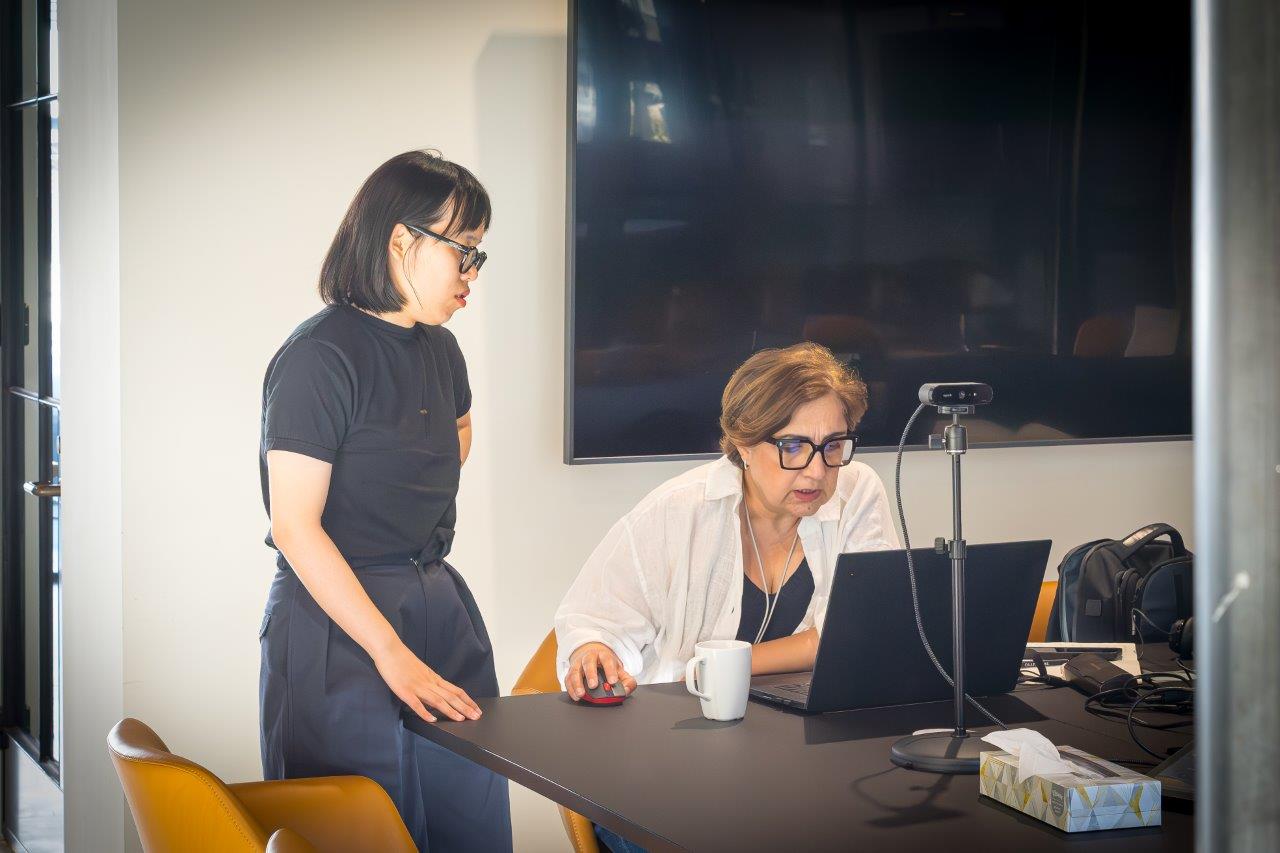
Every project begins, for Tina Giorgadze, with a single question.
What good can this do?
"Any project needs to have an intention," she says. "For me, the intention is to do good for the public and the environment. Every project is an opportunity for it."
It sounds deceptively simple. But in practice — in the messy, budget-driven, deadline-pressured reality of design — that question requires a kind of discipline. A refusal to let the urgent crowd out the essential. Tina has spent her career cultivating exactly that.
As Design Director and Senior Principal at SmithGroup, and Co-VP of Equity, Diversity & Inclusion (EDI) at IIDA SoCal, she occupies a rare position: one foot in the studio, one in the broader conversation about what the industry owes the people it serves. Equity, she'll tell you plainly, is not a feature. It is not an add-on. It is not a line item to be negotiated away when budgets tighten.
"Equity cannot be an added application," she says, "because it will never work properly. We must start from it."
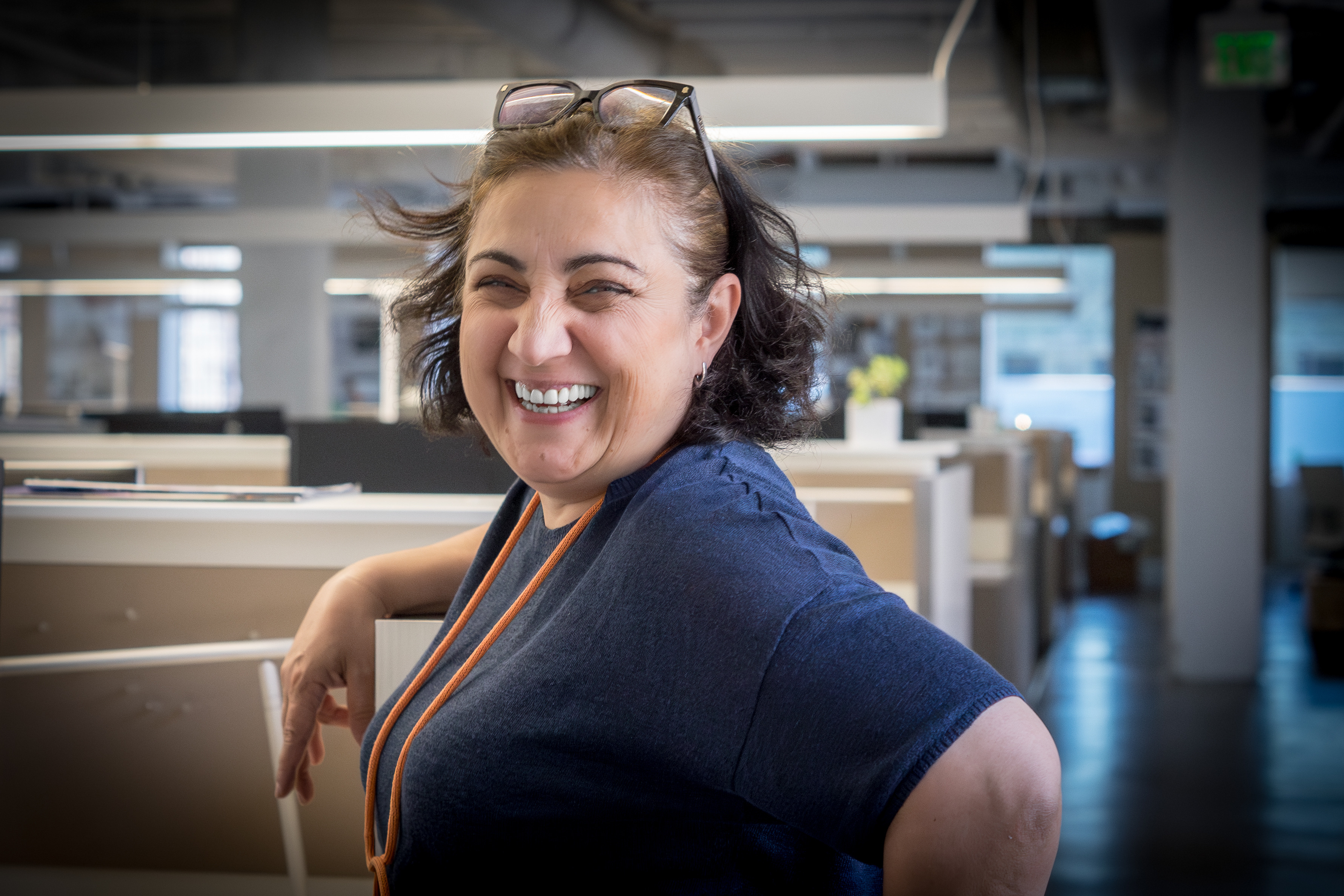
The project that crystallized everything was the Health and Learning Pavilion in Watts.
"That was one where I truly felt how empowering equity is for the building users," she says. The experience sharpened what she already believed into something she could articulate with precision: that equitable design begins not at the drafting table, but in the community itself.
"Start with the community — who will be the ultimate user of the space. Learn how your work can solve their pressing issues." And then, the harder question: does your team reflect the people you're designing for? Can they relate to their experiences? "Evaluate if your project improves or actually harms the community," she adds, "and make decisions accordingly."
Designing with a community rather than for one sounds, in theory, straightforward. Tina is honest about what it actually demands.
"Be prepared that it will be drastically different from what you imagine."
The process is not linear. It circles back. It requires returning, repeatedly, to the people who will live inside your decisions. "You have to constantly go back to ensure you address what the community envisioned for itself." There is humility in this approach — and, she would argue, far better architecture.
When Tina speaks about accessibility, she is not talking about compliance. She is talking about something far more expansive: designing for every age, every gender, every neurological sensibility, every cultural background. Not every project can address everything, she acknowledges — but knowing your user tells you where to focus.
One project changed how she thinks about what design can offer. Accessibility through wayfinding became a generator of every choice on her project for the UCLA Semel Institute while she was a design principal at Perkins and Will.
“Patients coming for treatment often get disoriented. Disorientation may seem like a small issue, but when you are already experiencing mental health issues or neurodivergence, this may cause a bigger challenge.” She pauses: “We decided to use daylight as a space navigation tool. Not only did it ease access within the building, but it also created a secondary benefit: unobstructed respite pockets that brought light into the building's core and dedicated a respite space for patients between procedures. This one move demonstrated how design can truly enhance human experience.”
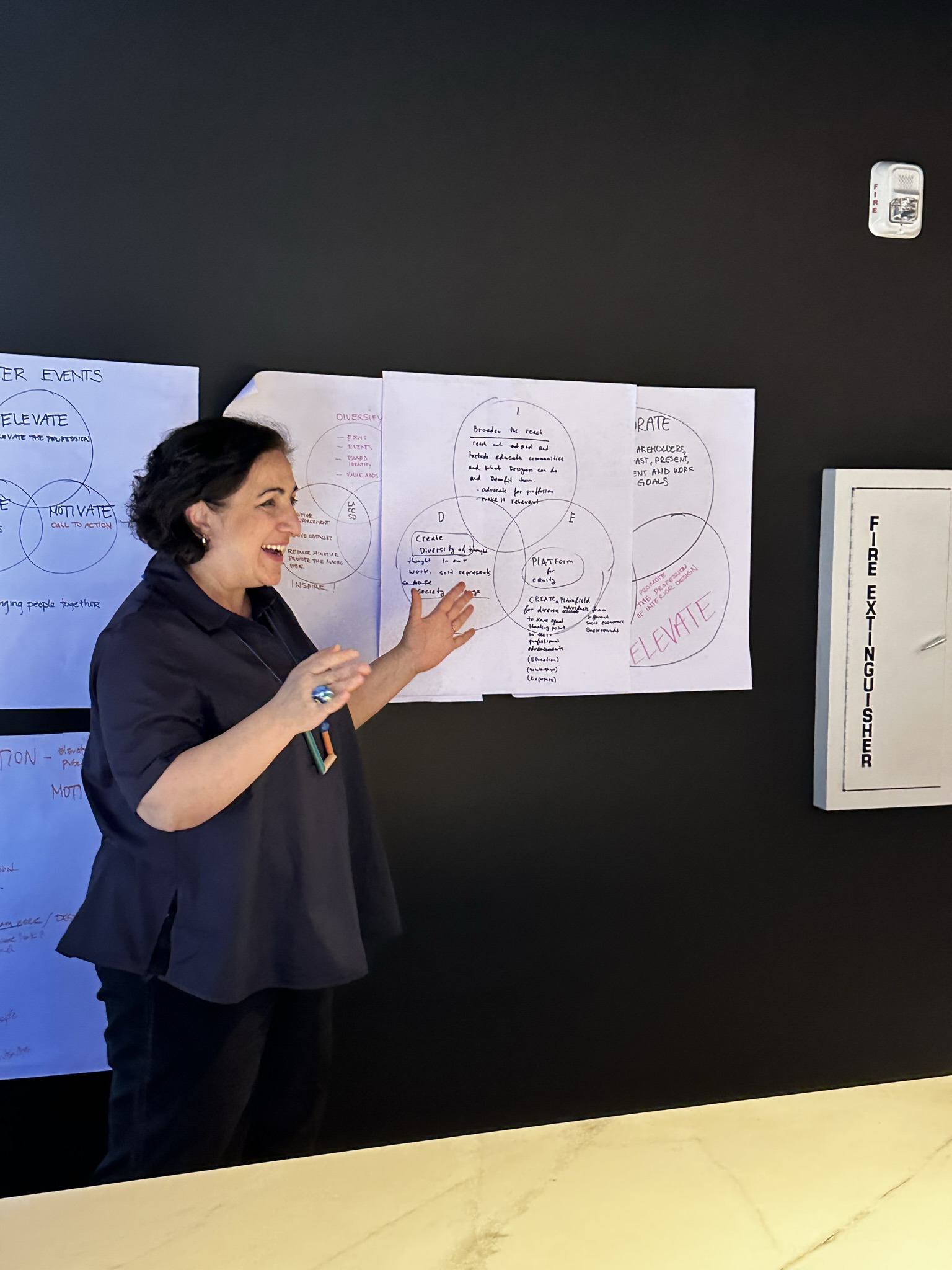
Cultural storytelling runs like a quiet current through everything she makes. Her process begins with research — the history of a place, the traditions of the communities nearby — but the ambition is never mere reference. It is resonance.
"Finding stories that could be told by design, but most importantly, creating an emotional experience that feels familiar to its users and respects the history and tradition of the place."
The projects where she's been given the space to go deep stay with her long after completion. "I have learned so much about the people around us, the land's history, and how important it is to celebrate it."
Progress, she says, is happening. But not fast enough, and not always with the right foundations. Cost is the objection she hears most often — equity framed as a luxury, a surcharge, a noble indulgence for flush budgets.
She does not accept the premise.
"There are numerous proofs that equitable buildings are also financially profitable when you dive deeper into the details." The return on investment is real. It shows up in productivity, in health outcomes, in retention. But it also shows up in something harder to quantify — something she describes with quiet precision.
"People feel they are respected in the building. They feel they will be taken care of by the business or entity that invests in the space."
For designers wondering where to begin, she offers something practical: a process map. Project milestones. Equitable goals defined at the outset, and a commitment to running every decision through that lens at every checkpoint.
Small steps. Consistent intention. The same philosophy, applied inward.
And at the root of all of it — the work, the advocacy, the years of showing up — is something personal.
"It is my responsibility as a designer," she says simply, "to design a safe space for anyone who sets foot in the space I design."
Some people enter a room and see square footage. Tina Giorgadze sees a promise.
Tina Giorgadze, LEED AP ID+C, IIDA, CHID, is Design Director and Senior Principal at SmithGroup and Co-VP of EDI at IIDA Southern California.