From Relic to Relevant: Reimagining Mid-Century Buildings for Modern Learning
Key Takeaways:
- Many mid‑century campus buildings are outdated and no longer support modern learning or community needs.
- Renovating and repurposing mid-century structures is a sustainable, cost‑effective alternative to new construction.
- If your campus includes mid‑century buildings, start by considering how reconfiguration of the floor plan, greater interior visibility, or a targeted addition could transform them into modern assets.
Nationwide, many mid‑century buildings are aging and overlooked. Often, these outdated structures no longer meet current standards for learning environments or support the connections and sense of community that are essential to student success.
Yet mid‑century buildings are diamonds in the rough, with far more potential than often recognized. In an era of funding uncertainty and declining enrollment, and as campuses pursue more ambitious sustainability goals, renovation and adaptive reuse offer powerful opportunities to transform existing buildings into environments that truly serve the next generation of students.
If your campus includes mid‑century buildings and you’re ready to transform aging structures into modern assets, start by asking these three questions.
1) Can You Rethink Circulation?
A concrete Brutalist mid-century building can inherently feel imposing and lifeless. For most mid‑century facilities, there is an opportunity to re‑envision the floor plan and create an open, flexible environment that supports a variety of learning modalities and space configurations, brings in daylight, and fosters a welcoming, vibrant place. An integrated problem-solving approach between architects and structural engineers is the key to rethinking double-loaded corridors and creating flexible spaces for study and gathering.
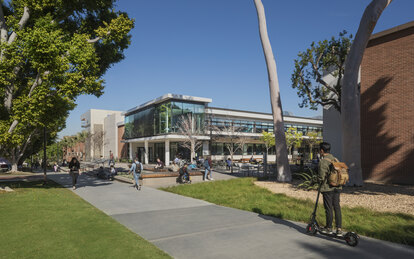
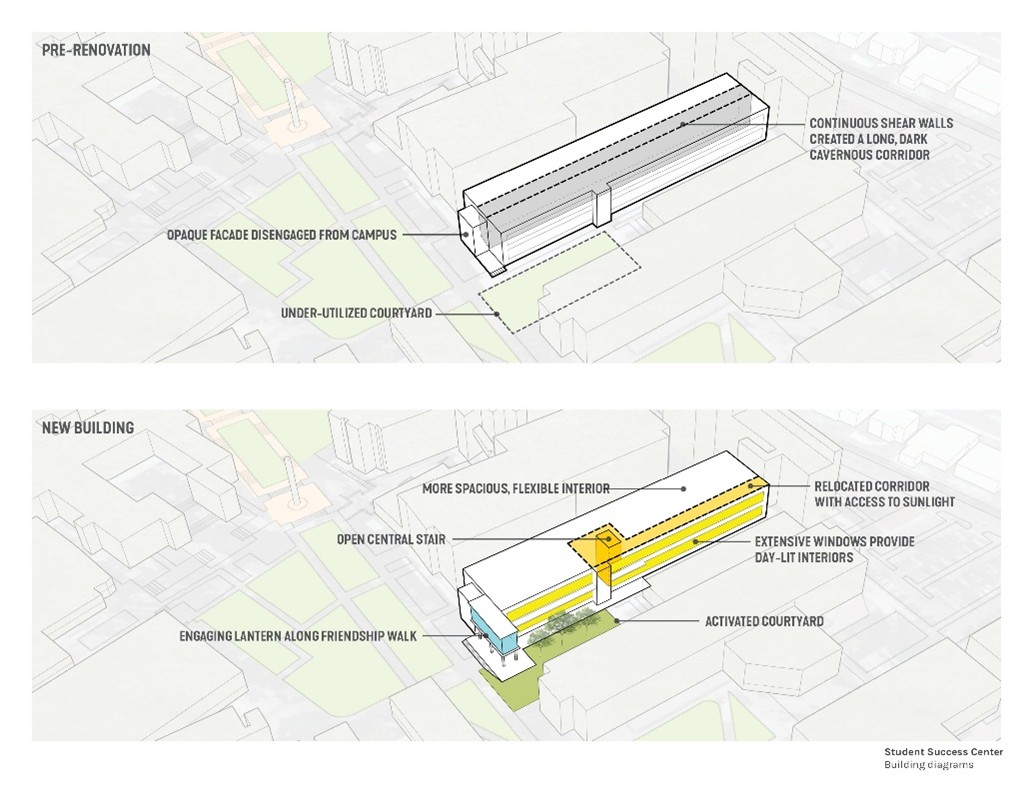
Before renovation, Cal State Long Beach’s (CSULB) Peterson Hall was a mid-century, three-story concrete building. Located next to Friendship Walk, a significant pedestrian route, Peterson Hall was chosen to become the Shakarian Student Success Center. The challenge was to make a welcoming and inviting environment for students out of a 1950’s building with dark and institutional corridors defined by concrete shear walls.
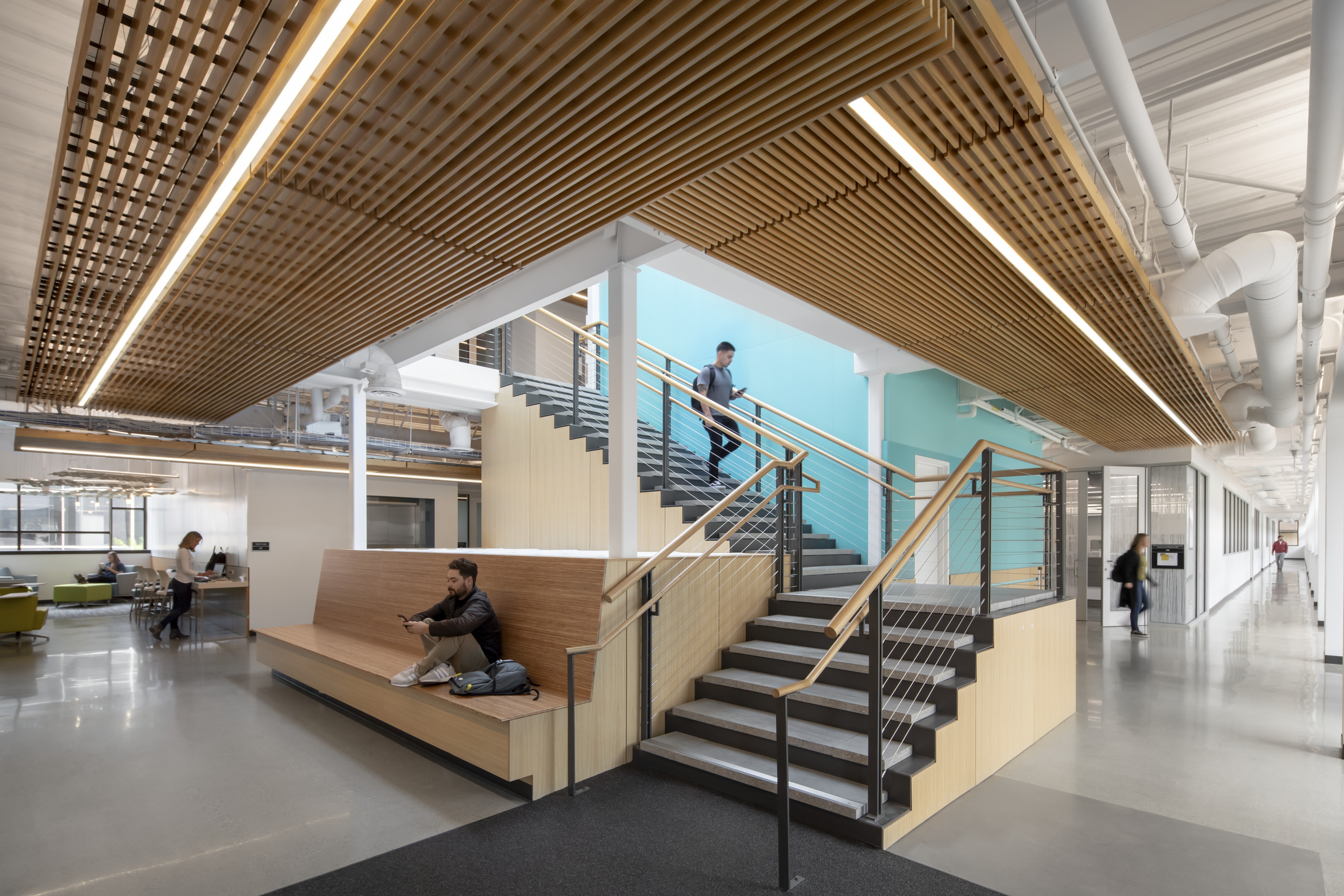
A series of structural interventions allowed holes to be cut through the corridor walls and the relocation of circulation to the perimeter of the floorplan. Now the departments occupy the whole depth of the floor plate and people and activity flow much more easily through the open and reconfigurable program areas.
"The building shines with a new life,” said Michel Garder, Director of Campus Planning & Sustainability at CSULB. “You can sense the old bones, but it has the right sense of energy we needed to attract students to utilize the services we offer them - and it keeps them coming back."
2) Can You Make the Interior Visible?
A transparent façade both shares the internal activity of a building with the community and increases daylight penetration to the interior. In a research building where access is secured and limited, creating a large window can pique curiosity of passersby and make the internal components of the building and the futuristic research happening within more accessible to the community.
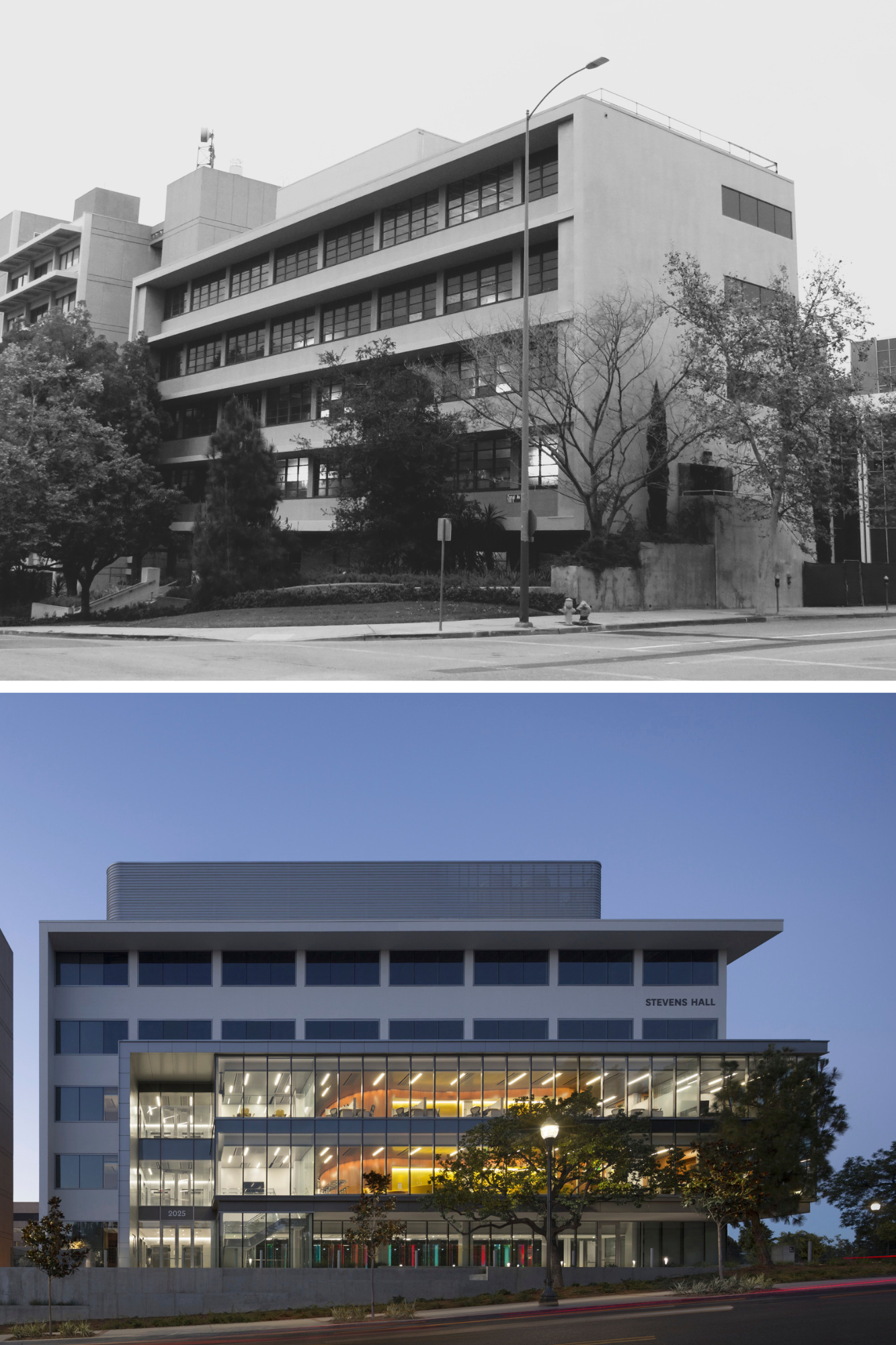
The University of Southern California transformed The Burrell O. Raulston Memorial Research Building, a 1950’s structure slated for demolition, into Stevens Hall, which is dedicated to neuroscience research. Low existing floor to floor heights, narrow floor plates, a non-compliant structural frame and a tight site comprised the primary challenges for building repositioning.
To reveal the internal components of the building and the research happening within, SmithGroup modified the simple box of the existing building by adding and framing a clear floating rectilinear mass. The transparent intervention not only places "science on display" throughout the day, but creates a lantern-like effect at night, celebrating the building's location on a prominent corner lot.
3) Can A Strategic Addition Support Projected Growth Needs?
A thoughtful and sensitive addition to an existing building can give it a new presence on campus, reinforce the campus organization, and provide space for program types that can’t be accommodated within the constraints of the existing building.
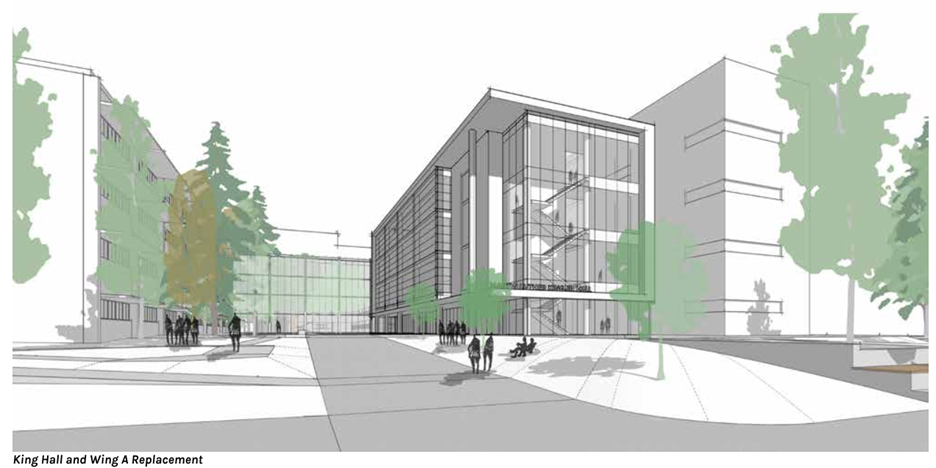
King Hall at Cal State LA represents an opportunity to reimagine and enhance classroom spaces, address their suitability, condition, and alignment with contemporary academic pedagogies, social advancements, and technological innovations. The building’s fully cast-in-place concrete shear wall construction, aging infrastructure, and significant deferred maintenance issues highlight the urgent need for a transformation to meet the project goals of flexible, innovative, and sustainable spaces, while offering a welcoming, empowering, engaging, and inspiring place for students.
In lieu of constructing a new replacement building for King Hall, the campus is exploring complete renovation of King Hall and replacement of one of the seismically deficient wings. The existing building will easily house the office and collaboration spaces, but due to low floor-to-floor heights (13’-0"), it does not accommodate classrooms that meet today’s standards for technology, flexibility, and student experience.
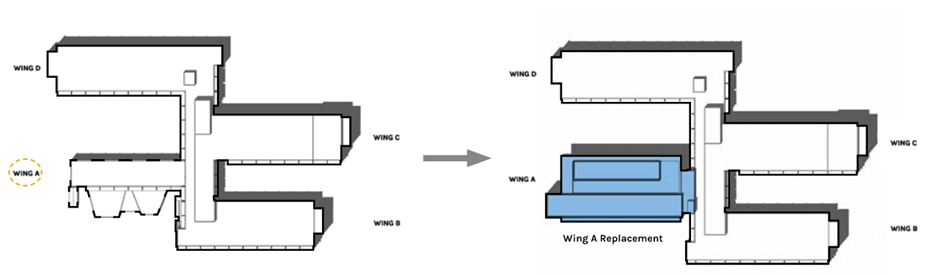
A replacement wing provides opportunities for modern teaching space and creates a prominent, new face to the campus. Wing A will feature a new building entrance, large capacity classrooms at ground level, and pre-function space with indoor-outdoor connections for non-academic events.