Health Equity by Design: Putting Design Justice into Practice
"Of all the forms of inequality, injustice in health is the most shocking and the most inhuman because it often results in physical death." — Dr. Martin Luther King, Jr.
Dr. King said it in 1966, and it carries the same urgent weight today. His vision of the Beloved Community, a society built on justice, dignity and radical interconnection, offers a powerful framework for understanding why some communities thrive while others suffer preventable illness and early death.
These disparities are not accidental. They are products of the social, economic and physical systems that shape our lives. The Beloved Community reframes our responsibility to address them as an act of liberation, one where housing, food, education and healthcare are communal rights, and no person's dignity depends on another's diminishment. When applied to design, this demands we center the most marginalized in every decision to build more equitable health systems.
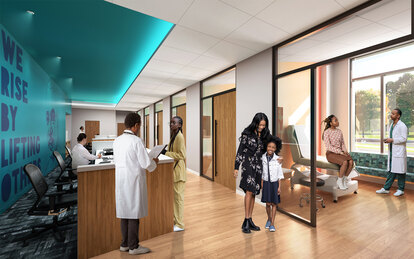
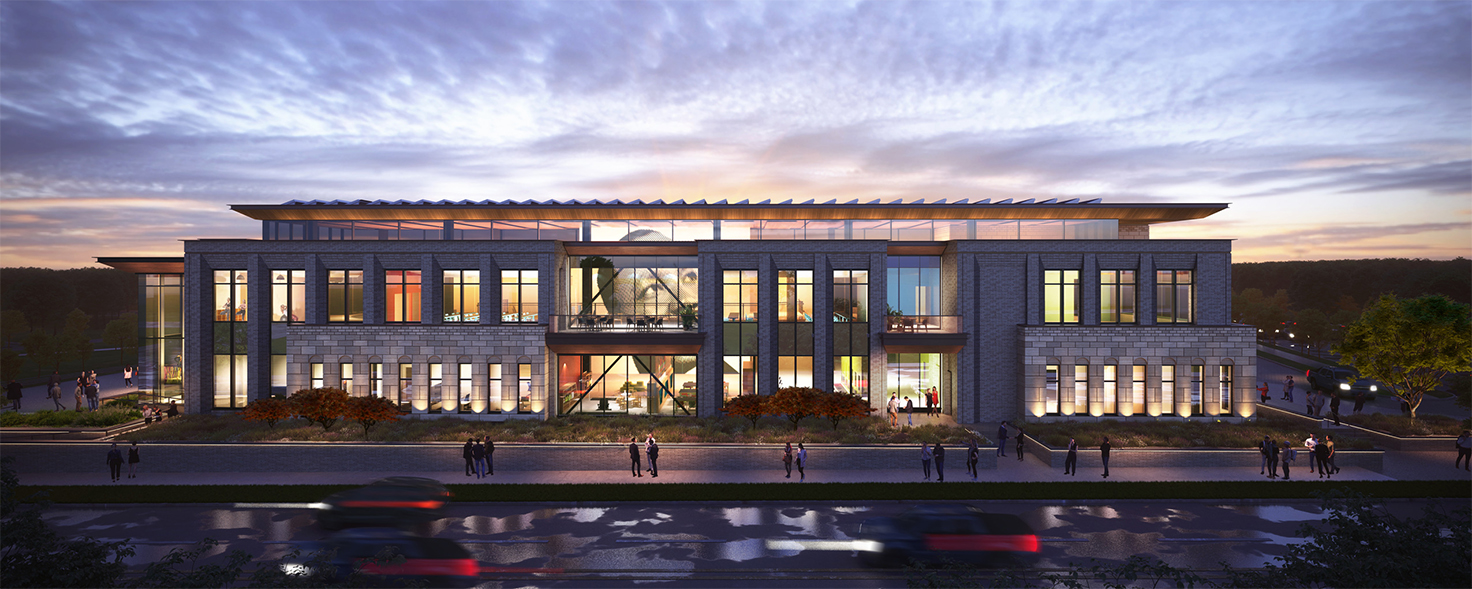
The Dr. Martin Luther King Jr. Community Center and Health Center (MLK Center) carries King’s vision forward as a living design intervention, placing health equity at the center of every program, partnership and patient encounter. It is what happens when designers stop asking "What should we build?" and start asking, "What does this community need to thrive?" Design becomes a health intervention, with community members as decision makers and the Beloved Community as a design decision.
The Problem: Decades of Disinvestment
Racine's Lincoln-King neighborhood bore the visible wounds of redlining and disinvestment, low homeownership, distressed housing, and deep health disparities long before COVID exposed what was already broken. Over 24,000 Racine residents were eligible for care at a Federally Qualified Health Center (FQHC) but had nowhere nearby to go.
The effects compounded across generations: poverty limited healthcare access, which worsened outcomes, which deepened poverty. The problem was never simply a shortage of healthcare. It was a shortage of everything that makes healthcare possible: stable housing, fresh food, economic opportunity, clean air and the basic dignity of being seen. Racine shares the challenges that shape major cities across the country, and stands as a working example of how communities can confront disinvestment and the root causes of the social determinants of health (SDOH).
The Diagnosis: SDOH as Structural Design Problems
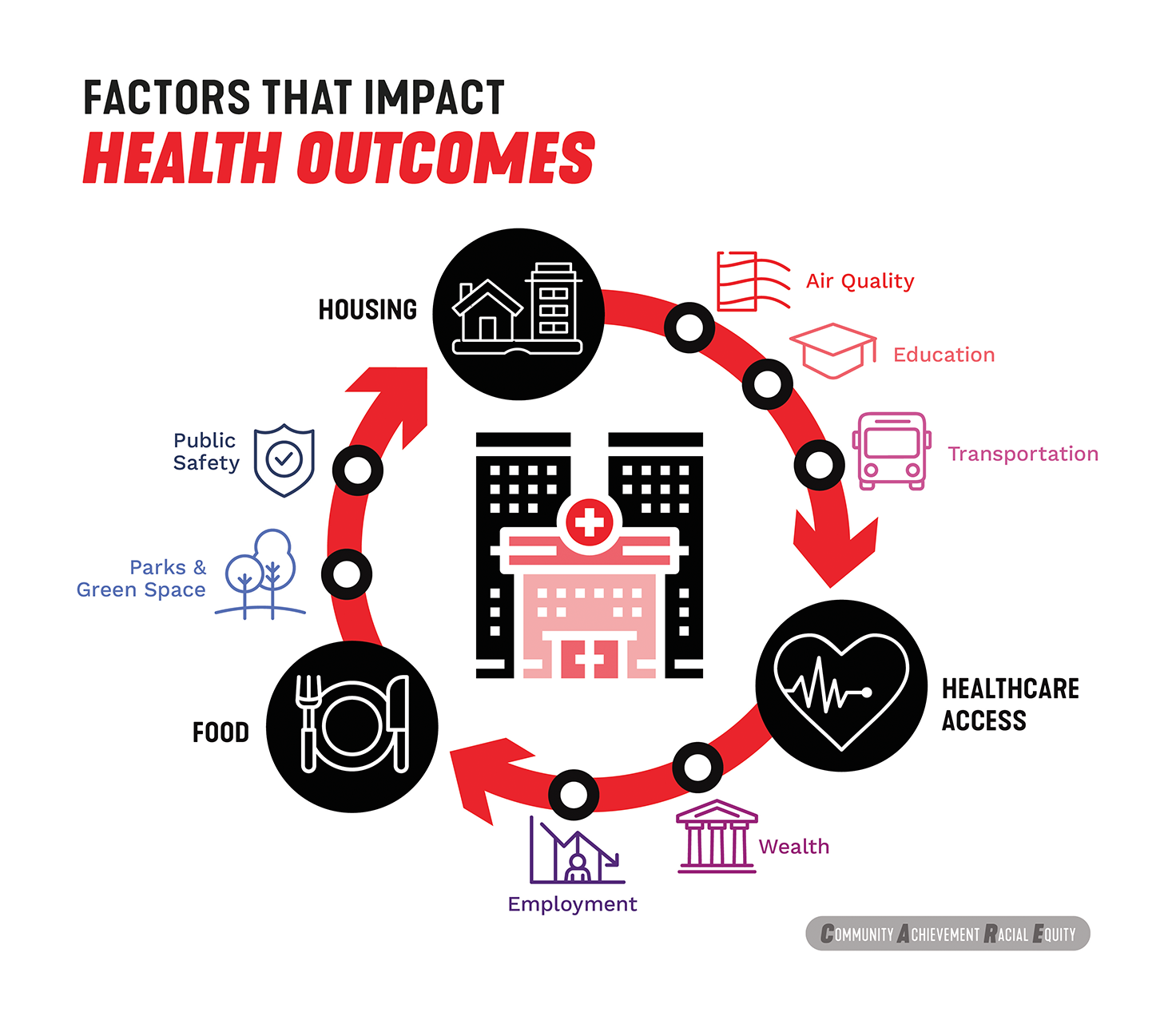
Clinical care access accounts for only 20% of health outcomes; the remaining 80% flows from social determinants of health: zip code, income, housing, food access, education and environmental exposure. Black communities carry the added weight of historical policy violence: redlining, discriminatory lending and environmental racism.
The MLK Center treats SDOH as structural design problems, addressing all five sectors directly:
- Economic Stability — new affordable housing and local hiring, building income mobility.
- Education Access — a shared campus with Julian Thomas Elementary, creating a pipeline for early childhood and adult learning.
- Neighborhood and Built Environment — Mayor Mason’s housing initiative, a net-zero building, and a campus master plan.
- Social and Community Context — a partnership with the City’s Public Health Department, empowering residents through health education and outreach.
- Healthcare Access and Quality — an integrated FQHC delivering primary, mental health, dental and behavioral care.
Addressing all five pillars together, with structural racism acknowledged as a root cause, produces the most meaningful progress toward health equity; every person receives what their circumstances require to reach their fullest potential. The MLK Center operationalizes that definition through every program and partnership.
The Treatment: Five Design Justice Commitments
Design justice begins with a simple truth: the built environment is never neutral. It either perpetuates harm or helps repair it. For the MLK Center, that truth shaped five commitments we can build into every project.
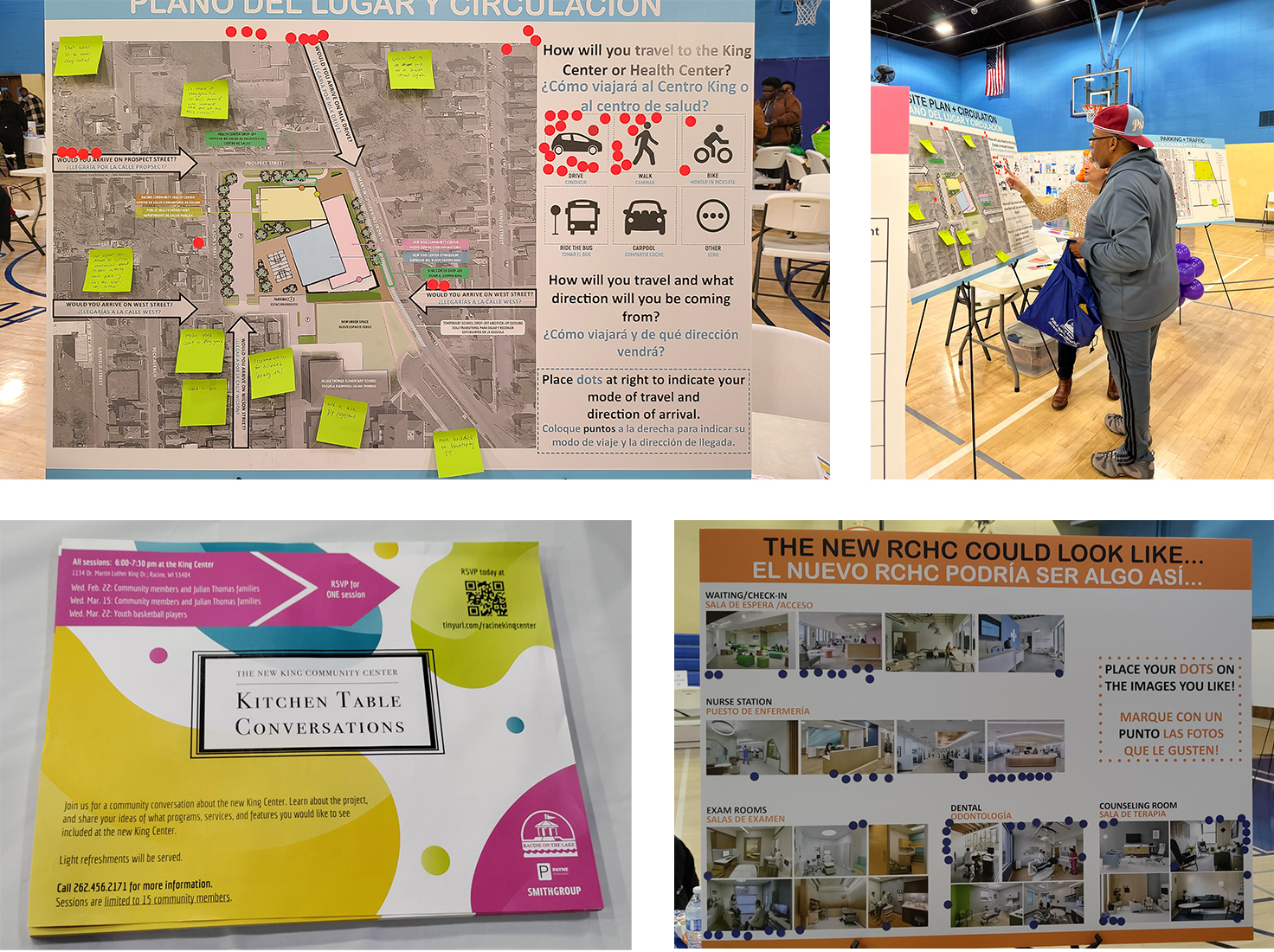
- Listen before you design. Go where the community already gathers and reflect what residents express in the building’s programming and spaces.
- Name the social determinants explicitly. Before you map the site, map the disparities in health resources and outcomes by zip code as part of a community health needs assessment.
- Co-locate services with purpose. Integration of programming and services under one roof creates an ecosystem where every entry point supports better health outcomes.
- Make sustainability a community benefit. Lowering operating costs while redressing a history of environmental neglect means more lives are reached.
- Design for equity. Equity-centered design tells residents this space was built specifically for them.
The Outcome: One Prototype Building – Every Determinant Addressed
Design justice starts with a question: who benefits, and who bears the burden? For the MLK Center, the answer began with community engagement firm Payne Consulting meeting residents in churches, block clubs and town halls before a single line was drawn. This made the community co-authors of a space built on the belief that health is social, cultural and communal.
Because the SDOH encompass disparities in housing, education, income and the urban environment as well as healthcare, solving them requires an integrated planning and design approach with a city-building perspective. The MLK Center drew on experts in health, civic, recreational, sustainable and urban design to maximize healthy outcomes on a single campus and to create a catalyst for additional neighborhood improvements.
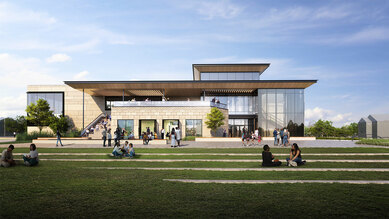
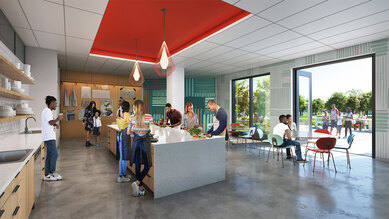
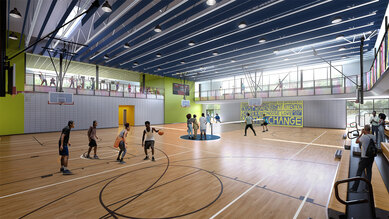
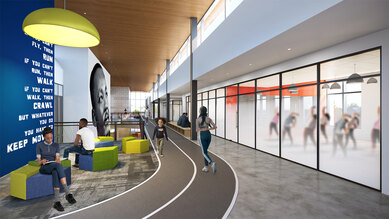
The MLK Center marks the first major investment in Lincoln-King since the 1960s and makes Racine (formerly Wisconsin's largest city without one) home to a FQHC. Offered under one roof:
- Medical, dental and behavioral care
- An E-sports computer lab
- A community kitchen for nutrition education
- An indoor gym and track, along with outdoor courts and play areas
- Community spaces for wellness, social gatherings and after-school programs
- Art and exhibits honoring Black culture and civil rights legacy
The environmental outcomes are equally intentional. Geothermal and solar energy and water reuse make this Racine's first net-zero municipal building, treating clean energy as a health intervention for communities bearing the greatest climate burden.
Nearby, Mayor Mason's housing initiative adds 40 townhouses and Habitat homes along with rental assistance, protecting residents from displacement and repairing decades of disinvestment.
The Prescription: The Beloved Community
The MLK Center demonstrates that building health equity requires design equity, with the same intentionality and community-centeredness that design justice practitioners bring to every project. When it opens on MLK Day 2027, it will stand as a $68 million public investment in the Lincoln-King neighborhood: directed by community voice, shaped by equity, built to last.
The MLK Center is Racine's answer to King's vision. It shows that the Beloved Community doesn't need another plan. It needs designers willing to be transformed by the communities they serve, and communities willing to come together to build it, both held accountable by the process and commitment they share.