What Makes a Campus “Historic”? Rethinking Preservation on University Campuses
How buildings, landscapes, and lived experience shape institutional identity—and why it matters for today’s students
Key Takeaways
- Historic value goes beyond designation. A university campus’s most meaningful assets are not always those listed on the National Register of Historic Places.
- Landscapes and relationships matter. Historic character is shaped by how buildings, open spaces, and vistas work together over time.
- Preservation should serve students. Adaptive reuse and thoughtful reinvestment can enhance university legacy and the modern campus experience.
Reframing What “Historic” Means on Campus
When colleges and universities talk about historic preservation, the conversation often starts—and stops—with eligibility for the National Register of Historic Places or compliance with a historic district overlay. While those designations are important, they represent only one lens for understanding what is truly historic on a campus.
A more meaningful approach begins with assessing the broader context and evolution of the campus itself. What features have contributed most to its identity over time? Which spaces shape how students, faculty, alumni, and visitors experience the campus today? And how do these elements—buildings, landscapes, and shared histories—work together to create a sense of place?
In this framework, “historic” is not just about age or architectural style. It is about significance, memory, and continuity.
Looking Beyond the Register
Not every contributing feature of a campus is formally designated—and that is okay. Some of the most important places may be student gathering spaces, places where significant campus events occurred or landscapes that are deeply embedded in daily campus life but overlooked in traditional preservation conversations.
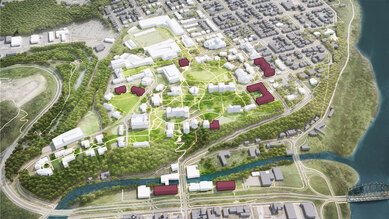
For example, Lafayette College recently completed a campus master plan that evaluated historic resources based on their ability to amplify the institution’s legacy. Rather than defaulting to preservation or demolition, the study asked a more strategic question: Which buildings and places are essential to preserving institutional identity, and which can be adapted or removed to support future growth?
This kind of evaluation reframes preservation as a purposeful act, aligned with mission and long-term planning rather than checklist compliance.
Preservation Is More Than Buildings
Historic preservation on campus cannot be separated from the surrounding evolving physical and cultural landscape. The relationships between buildings, open spaces, circulation paths, and views are often what make a campus legible and memorable.
Historic landscapes include:
- The shape and orientation of the grounds
- Formal lawns and informal gathering spaces
- Viewsheds and sightlines to signature buildings
- Heritage trees and plantings
- Cultural assets and traces of pre-campus history
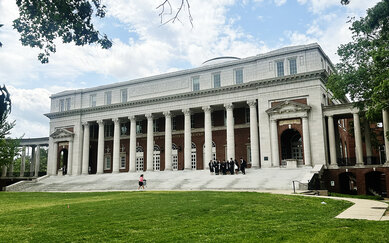
At Vanderbilt University, for example, a housing study focused specifically on identifying opportunities to sympathetically locate a new residential facility on the Peabody Campus to complement the features of its historic landscape. Formal lawns, building proximities, and historic viewsheds were evaluated not just as aesthetic features, but as defining elements that support residential life and campus character.
Similarly, Clemson University has faced the complex challenge of stewarding a campus with a layered history—from its earlier use as an antebellum plantation to its present role at the center of campus life. Their approach acknowledges cultural and historic assets as part of an evolving narrative, rather than attempting to freeze the campus in a single moment in time.
Balancing Legacy with Change
Every campus evolves. New academic programs, enrollment shifts, accessibility needs, and sustainability goals all require change. The question is not whether campuses should change, but how they change while respecting what came before.
A thoughtful preservation strategy makes room for adaptation. It identifies which historic elements must remain intact, which can be sensitively modified, and which might be repurposed entirely to support contemporary use.
This balance allows institutions to honor legacy without limiting evolution—and avoids the false choice between preservation and progress.
History as a Living Part of the Student Experience
Preservation is most successful when it directly enhances the student experience. Buildings and landscapes that are visible, accessible, and actively used carry forward institutional history in a way that plaques and archives alone cannot.
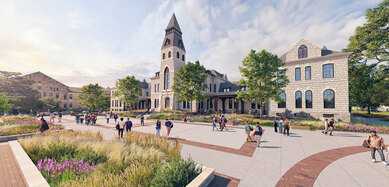
At Kansas State University, planning efforts recommended repurposing Anderson Hall—an administration building listed on the National Register that was one of the first buildings on campus—to include more student-centered uses. By bringing students into the building and creating greater connection to the historic Anderson lawn, the university reinforced its significance not just as a heritage building, but as a living part of campus life.
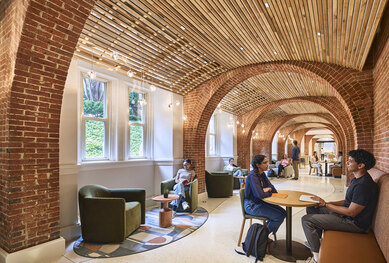
Similarly, Georgetown University’s rethinking of the ground floor of Healy Hall, a National Historic Landmark, illustrates how adaptive reuse can breathe new life into even the most iconic structures. Once largely administrative, the ground level has been transformed into a more welcoming, student-oriented destination, strengthening both the building’s function and its place in the daily rhythm of campus.
Asking the Right Questions
As campuses plan for their future, assessing what is “historic” should begin with a set of guiding questions:
- What spaces and places matter most to our institutional story?
- How do buildings and landscapes work together to define campus character?
- Which historic assets enrich learning, belonging, and engagement today?
- How can preservation support (not hinder) evolving academic and student needs?
When preservation is approached as an integrated planning strategy, it becomes a tool for clarity rather than constraint.
Moving Forward with Intention
Historic preservation on campus is not about protecting everything old. It is about identifying what matters most—and stewarding those assets with care, creativity, and purpose.
By broadening the definition of “historic” to include landscapes, relationships, and lived experience, institutions can make more informed decisions about what to preserve, what to adapt, and how to ensure their campuses remain both meaningful and resilient for generations to come.