The Architecture of Honor: The Legacy of the Intrepid Centers
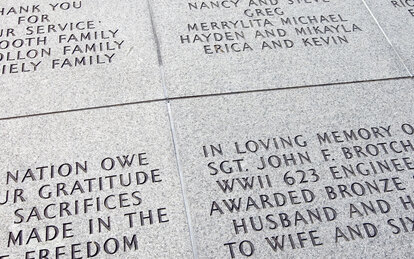
Few experiences are as humbling as designing spaces that help our active-duty service men and women heal from their wounds—the visible and the invisible. At SmithGroup, this work has shaped our healthcare practice for decades, most notably through the Intrepid projects: a series of groundbreaking facilities that redefined military healthcare while profoundly influencing the way we design for trauma patients undergoing rehabilitation.
The journey began with the Center for the Intrepid, an advanced, first-of-its-kind rehabilitation center for amputee and burn patients that set a new benchmark for military medicine. From there, the vision expanded to the National Intrepid Center of Excellence (NICoE), focused on traumatic brain injury (TBI) and psychological health. Ultimately, 10 Intrepid Spirit Centers extended this mission across Army, Air Force, and Marine installations nationwide, creating an entirely new network of care that has transformed thousands of lives and inspired our approach to whole-person design.
This innovative building program began two decades ago, thanks to the leadership and determination of New York developer Arnold Fisher, founder of the Intrepid Fallen Heroes Fund. His belief was simple yet powerful: caring for our wounded warriors is a national responsibility, not charity. That conviction sparked a unique public-private partnership with the Department of Defense, facilitating a faster stand-up of these first-of-a-kind, world-class facilities, funded entirely by private donations, that would have taken years to develop under traditional procurement processes.
The result is more than a series of buildings: it is a purpose‑built national network where design, medicine, and human experience converge—honoring service, restoring dignity, and advancing holistic rehabilitation care for those who have served.
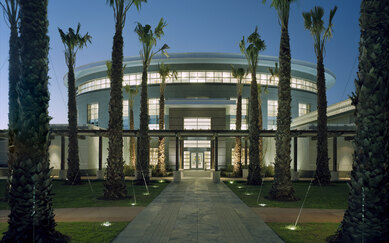
The Center for the Intrepid
The Center for the Intrepid (CFI) in San Antonio, Texas, is one of the most advanced rehabilitation centers for amputee and burn patients. The wolrd-class facility integrates prosthetics research and fabrication with robotics, biomechanics, and immersive virtual reality therapies. Specialty environments—including an indoor wave pool, elevated running track, climbing wall, and uneven‑terrain simulations—support real‑world recovery, while first‑generation innovations such as a 300‑degree virtual‑reality immersion system and a pioneering gait analysis laboratory set new benchmarks for rehabilitation design.
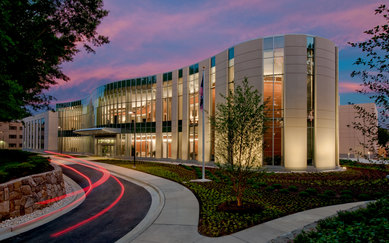
The National Intrepid Center of Excellence (NICoE)
Located on the campus of Walter Reed National Military Medical Center in Bethesda, Maryland, the National Intrepid Center of Excellence (NICoE) set a new global benchmark for the treatment of traumatic brain injury (TBI), post‑traumatic stress disorder (PTSD), and complex brain health conditions. By uniting clinical care, research, and education under one roof, NICoE introduced a holistic, whole‑person model of care—integrating traditional medicine with complementary therapies such as art and music therapy, a first for the U.S. military and an approach later embraced by the private sector. The center is supported by advanced technologies, including 3T fMRI, MEG, and PET/CT imaging, as well as a Computer‑Assisted Rehabilitation Environment (CAREN) simulator addressing both physical rehabilitation and post‑traumatic stress. Together, these elements established a new standard for integrated, interdisciplinary care.
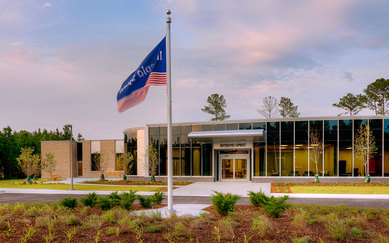
The Intrepid Spirit Centers
With 10 state‑of‑the‑art satellite facilities strategically located across the United States, the Intrepid Spirit Centers extend NICoE’s groundbreaking interdisciplinary model of care closer to where service members live and work. Each center built between 2013 and 2024 adapts the holistic approach pioneered at NICoE—integrating advanced diagnostics, clinical treatment, and complementary therapies—into an accessible, locally embedded setting that supports continuity of care and daily life. The final center, completed in 2024 at Fort Bliss, Texas, marks the completion of the nationwide network envisioned under this program.
Every center was an opportunity to refine. We didn’t just replicate—we evolved. That mindset drove innovation across the entire program. Each iteration made the next center smarter, faster, and more responsive to patient needs.
Matthew Reiskin
Senior Principal, SmithGroup
What made these projects truly unique was the way their Concept of Operations (CONOPS) evolved in parallel with the design process. For both the CFI and NICoE, new clinical workflows, research protocols, and therapeutic models were being defined at the same time the architecture was taking shape. For the Intrepid Spirit Centers, each successive project is based on a standardized template developed by SmithGroup that prescribes a similar layout and appearance while allowing the design to be customized to each base and regional character.
This wasn’t a linear process—it was a dialogue. Each informed the other: design decisions supported emerging care models, while operational insights shaped spatial adjacencies and technology integration. This dynamic, iterative process gave us unprecedented insight into clinical operations and taught us to adapt on the fly, ensuring that every square foot served the mission of whole-person care.
Impact Beyond the Military
While the NICoE program’s impact on service members and their families is immeasurable, its influence on SmithGroup—and on healthcare architecture as a whole—has been transformative. These projects challenged us to think differently about healing environments. Long before “trauma-informed design” became industry standard, NICoE taught us to consider the psychological and emotional dimensions of space alongside physical recovery. We learned that architecture can be an active participant in care—reducing stress, fostering dignity, and supporting resilience.
The program also reinforced the importance of human-centered design. Working closely with clinicians, patients, and families deepened our understanding of empathy in healthcare environments. Every design decision—from daylighting strategies to spatial adjacencies—was guided by the question: How will this feel for someone recovering from trauma and cognitive challenges?
Finally, the rollout of the Intrepid Spirit Centers sharpened our expertise in large-scale templating and adaptive standards. Each site required balancing consistency with local context, a skill that now informs our approach to system-wide healthcare programs.
For SmithGroup, the Intrepid projects were never just a series of buildings. It was a partnership with service members, families, researchers, and caregivers, rooted in purpose—a chance to contribute to a mission larger than ourselves. These centers have helped thousands of service members recover, reintegrate, and, in many cases, return to active duty. They stand as living proof that design can honor sacrifice and enable healing.
As healthcare architects, we carry forward the lessons learned from the CFI and NICoE into every project: the power of integrated care, the necessity of empathy, and the belief that environments can transform lives. The Intrepid projects sparked a movement that changed the trajectory of military medicine—and, in many ways, changed us too.
Designing for rehabilitation is about restoring hope as much as restoring health. When you design for trauma, you design for humanity—honoring the individual journey, not just the clinical protocol. Every adjacency, every material choice is guided by how it will feel to someone in trauma recovery.
Brenna Costello
Vice President, Health Studio Leader