Human-First and Future-Ready: A Design Framework for Unlocking Human Potential
As enthusiasm around AI grows, what is truly at stake often gets lost: People
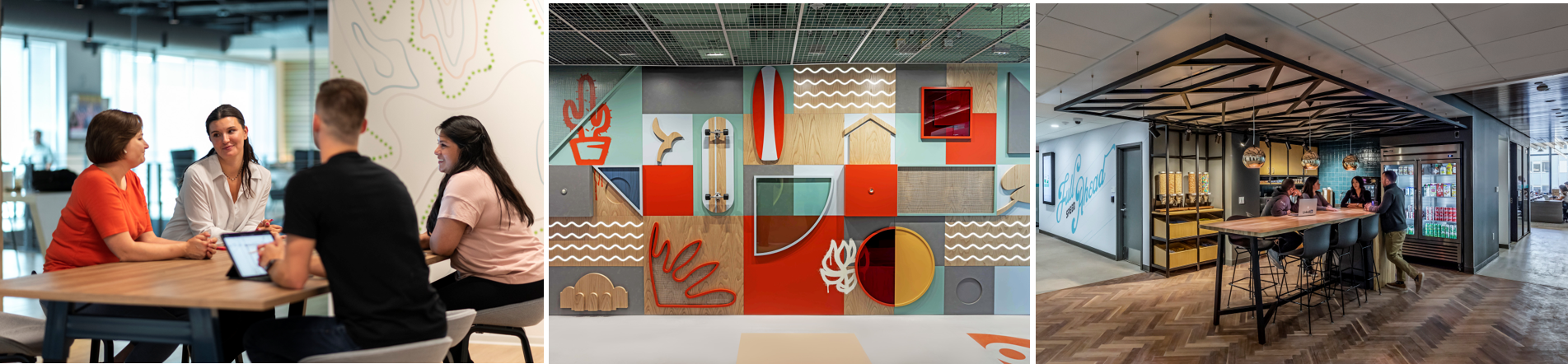
The future of work isn’t about technology -- it’s about humanity. With 167 million people in the U.S. workforce and birthrates declining, a critical question emerges: How will we grow the economy and drive innovation with fewer people? People’s role in shaping progress has never been more critical. Holding onto human potential is now an economic imperative. In this future, spaces must remain designed for people, not machines. Ideas, creativity, divergent thinking and ownership are becoming the ultimate differentiators.
As Futurist Hart Brown noted during a keynote at SmithGroup’s Client Advisory Board event:
Ideas are about to become a premium. If you can bring people into a space, create collaboration and generate ideas, that’s what will separate the winners. It’s not going to be AI that separates the winners. It will be the human experience.
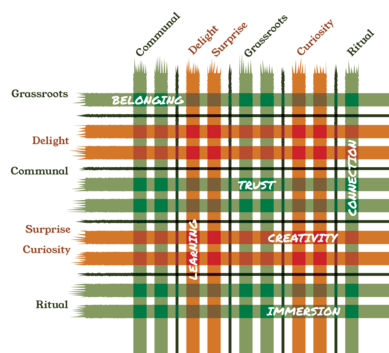
Our framework seeks to design places as catalysts for humanity in the AI era—a guide to creating environments that unlock creativity, foster trust and sustain resilience in humans. There isn’t a singular solution, but rather, an interwoven matrix of perspectives comprised of learning, variety, critical thinking, ownership and moments of pause or exploration that together form the tapestry of human experience.

Designing for Possibilities, Not Prescription
In the AI era, thriving is not just about adopting and adapting to new technology: it’s about elevating what makes us human. Our framework rests on two primary tenets of human experience:
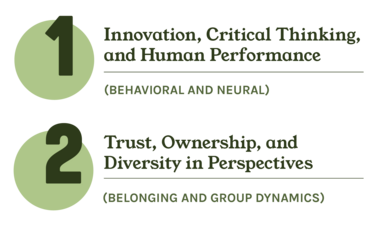
1 | Innovation, Critical Thinking, and Human Performance
The first tenet focuses on unlocking cognitive and creative potential. Humans excel when environments stimulate curiosity and spark imagination. Designing spaces that delight and surprise encourages learning, exploration and breakthrough ideas. Here, design goes beyond function to become a platform for creativity and deep engagement with ideas.
2 | Trust, Ownership, and Diversity in Perspectives
The second tenet addresses the emotional and social dimensions of work. Innovation cannot thrive without trust and belonging. Spaces that foster rituals and communal engagement anchor people, promote participation and empower authentic contributions. These environments nurture inclusion and transform workplaces into collaborative communities built on trust.
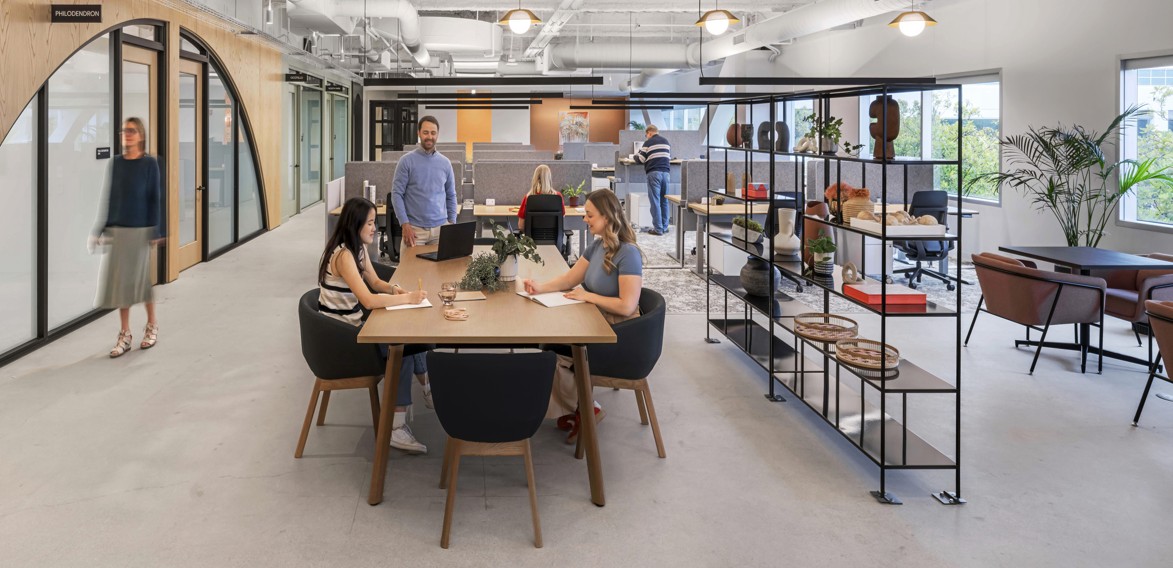
HOW: Interweaving the Human Experience Tapestry
Good design alone cannot manufacture deeply human experiences like innovation, belonging or trust. These qualities cannot be forced, but they can be invited. Thoughtful design creates fertile ground for these moments, which might otherwise be missed in spaces lacking intentionality.
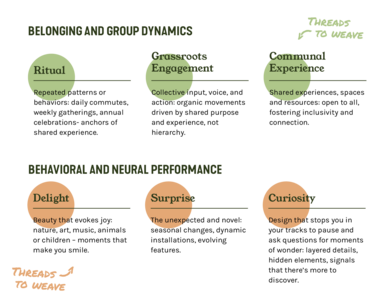
SmithGroup’s framework translates human-centered tenets into tangible design elements —threads of unique texture and color that, when woven together, form a rich tapestry of experience.
Threads to weave:
Behavioral and Neural Performance
1 | Delight
Beauty that evokes joy: nature, art, music, animals or children – moments that make you smile.
2 | Surprise
The unexpected and novel: seasonal changes, dynamic installations, evolving features.
3 | Curiosity
Design that stops you in your tracks to pause and ask questions for moments of wonder: layered details, hidden elements, signals that there is more here to discover.
Belonging and Group Dynamics
1 | Ritual
Repeated patterns or behaviors: daily commutes, weekly gatherings, annual celebrations and anchors of shared experiences.
2 | Grassroots Engagement
Collective input, voice and action: organic movements driven by shared purpose and experience, not hierarchy.
3 | Communal Experience
Shared experiences, spaces and resources: open to all and fostering inclusivity and connection.
Designing for What Machines Cannot
To bring this framework to life, we conducted a two-part workshop at our annual Client Advisory Board that focused on generating ideas beyond conventional boundaries. Participants explore tangible ideas and solutions through four distinct project typologies, each viewed through the lens of four human perspectives.
- Local Residents & Communities
- End Users & Primary Users
- Developers, Owners & Project Partners
- Future Generations
The call to action is simple yet profound: design boldly for what machines cannot — connection, creativity, and meaning. In doing so, we create not only places, but possibilities for generations to thrive.
To read the full report, click here.