UCSF Benioff Children’s Hospital Oakland
Reimagining Pediatric Care in the Heart of the East Bay
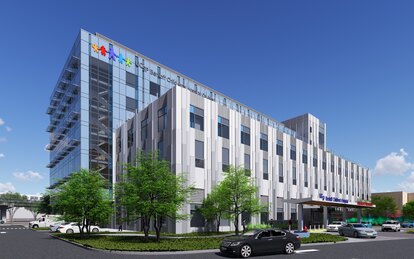
For generations, UCSF Benioff Children’s Hospital Oakland has been a cornerstone of pediatric care for the East Bay. The New Hospital Building (NHB) marks a transformative investment in the future of children’s healthcare in the region. Designed by SmithGroup, this expansion creates a modern, flexible environment centered on the patient experience, family needs and evolving models of pediatric care.
Client
University of California, San Francisco
Location
Oakland, California
Markets/Services
Health, Behavioral Health
A Hospital Designed Around Lived Experience
The project rethinks what a children’s hospital can be when it’s designed around the day-to-day experiences of patients, families and care teams. Planning and design decisions at every scale—from emergency department flow to material selection—were informed through active engagement with clinicians, families and community stakeholders.
This collaborative process ensured that the building responds not only to clinical requirements, but also to emotional, cultural and social needs. The result is an intuitive, family-centered environment that supports care team performance while offering a welcoming, human experience.
Architecture Rooted in Clarity, Access and the Urban Context
The new hospital is defined by a glass-clad bed tower rising from a three-story diagnostic & treatment podium, establishing a distinct civic presence while optimizing daylight, views and visual connection to the surrounding city.

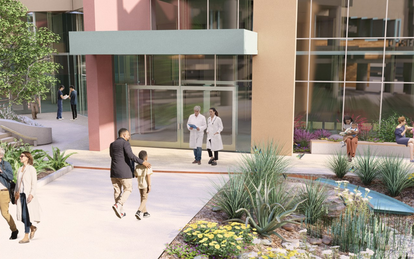
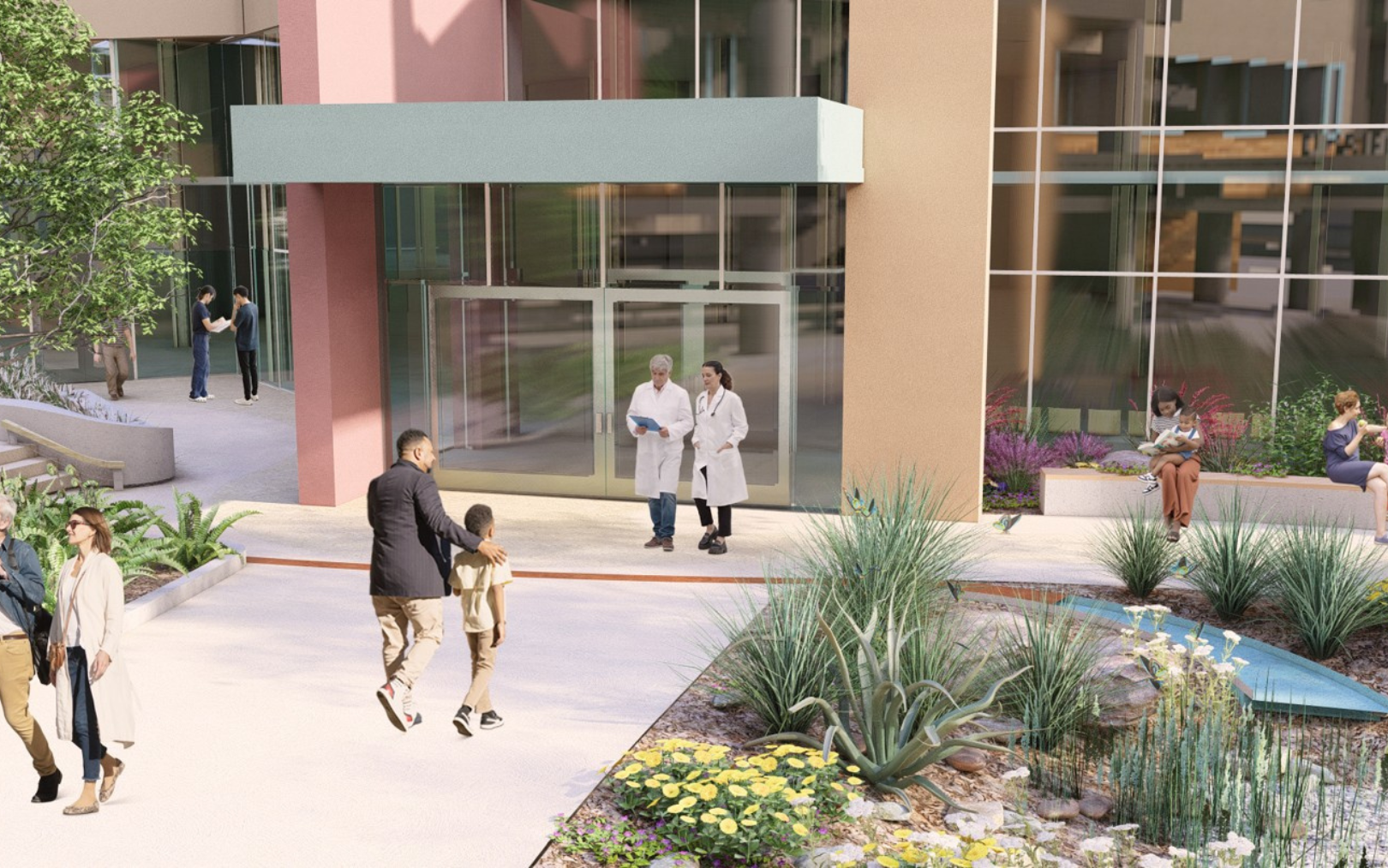
At street level, the building engages the neighborhood with a welcoming, pedestrian-oriented entrance and landscaped outdoor spaces that support play, respite and connection. Thoughtful massing balances transparency and warmth, while clear, legible circulation enhances clinical and eases the journey for patients and families moving through unfamiliar clinical environments.
Supporting Complex Pediatric Care Needs
Extensive listening sessions with families, clinicians and community representatives provided early insights that informed key planning decisions, including tripling the number of single‑patient rooms, transitioning NICU wards to private rooms and right-sizing the emergency department to align with evolving care team models. The project also introduces new prep and recovery spaces alongside improved family waiting and consultation areas designed to keep families close, informed and comfortable throughout the care experience.
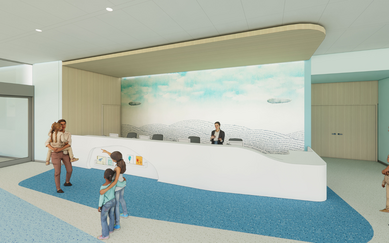
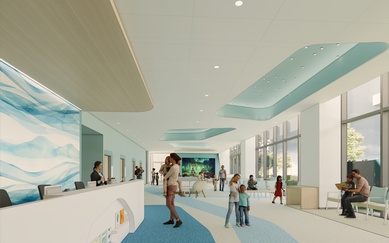
A dedicated 20-bed behavioral health unit offers expanded accommodations for parents to ease the transition to inpatient care. Traditionally, children with both medical and behavioral health needs are treated in separate units, leading to potential gaps in coordination. The unit addresses this challenge through five adaptable rooms equipped for both psychiatric and acute nursing care, allowing holistic treatment in a single location and improving continuity of care. This flexible model reflects the increasing complexity of pediatric behavioral health and allows services to evolve with patient needs.
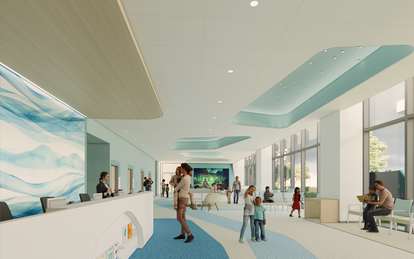
Interior environments are carefully attuned to the sensory and emotional needs of children, families and staff. Abundant natural light, calming materials, and intuitive spatial organization create spaces that feel supportive rather than clinical. Design elements are refined to reflect the broad age range of patients—from infants to young adults. The palette and textures favor sophistication, calm, and authenticity, creating spaces that feel age-appropriate and dignified for adolescents while remaining playful and engaging for younger children. Biophilic principles are woven throughout the building, referencing the nearby Temescal Creek ecosystem through natural palettes, organic textures and connections to outdoor areas.
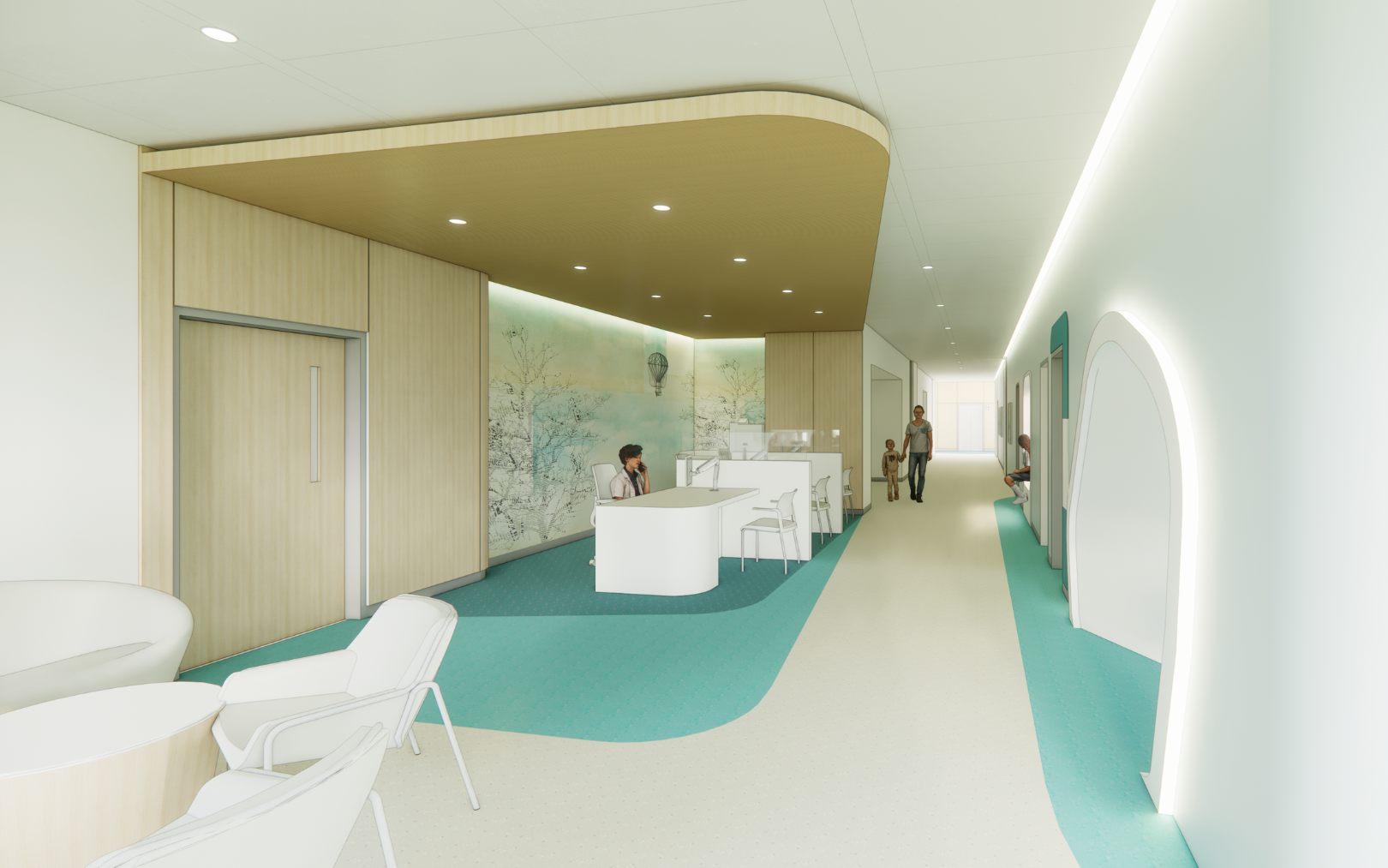
Neuro-inclusive design principles are woven throughout the hospital, offering settings that support both hypersensitive and hyposensitive individuals. Multi-sensory rooms, decompression zones and quiet niches provide options for stimulation or retreat, while familiar materials and clear visual cues support orientation and ease. Art and environmental graphics embrace culturally inclusive storytelling, with references to the local ecology and the diverse communities the hospital serves. Staff areas are designed with equal attention, offering restorative environments that support care teams who work long hours in high-intensity settings.
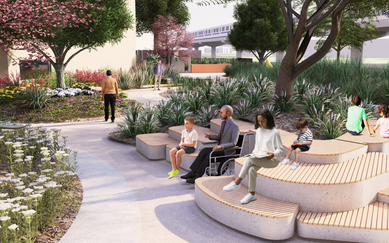
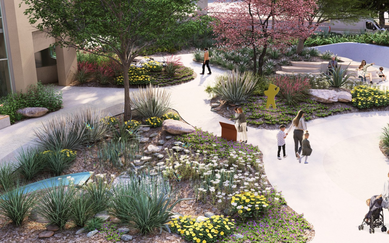
The hospital’s location—surrounded by elevated freeways, BART infrastructure and underground utilities—required highly coordinated planning. Through integrated project delivery and close collaboration with multiple agencies, the team resolved significant site constraints while improving access and campus flow. Excavating a freeway embankment created space for relocated services and enabled construction on the tight parcel. The resulting design enhances the pedestrian experience and introduces landscaped areas that contribute to a more welcoming campus.