The Evolution of STEM Learning Environments
Key Takeaways:
- STEM education is evolving faster than ever, and the spaces that support it must lead that change.
- Designing for adaptability, interdisciplinary, multifunctionality, and collaboration ensures that facilities remain relevant as technologies, pedagogies, and workforce needs shift.
- By anticipating future demands rather than reacting to them, institutions can create environments that foster innovation, inclusivity, and student success.
The next decade of STEM education will demand spaces that not only teach but transform and prepare students for challenges we can’t yet imagine. STEM fields are expected to drive job growth well into the next decade, even as roles within them evolve rapidly. To keep pace, facilities designed to support STEM education must do more than adapt; designs must anticipate and respond to change. Here are three key considerations when designing STEM buildings for the future.
1. Allow for the Unknown
Architects and institutions must allow spaces that invite experimentation, where students can test ideas, break things, and make noise in support of hands-on learning. While flexibility through movable furniture is common, long-term adaptability is critical to sustain relevance.
“We are planning facilities that can adapt quickly to new tools and research needs rather than fixed single-purpose labs,” said Wayne Northcutt, Assistant Campus Architect at University of Colorado Boulder. “Similar to our approach with research labs, our new learning spaces must be flexible in supporting different pedagogies, including reconfigurable instructional labs and shops that support project-based learning.”
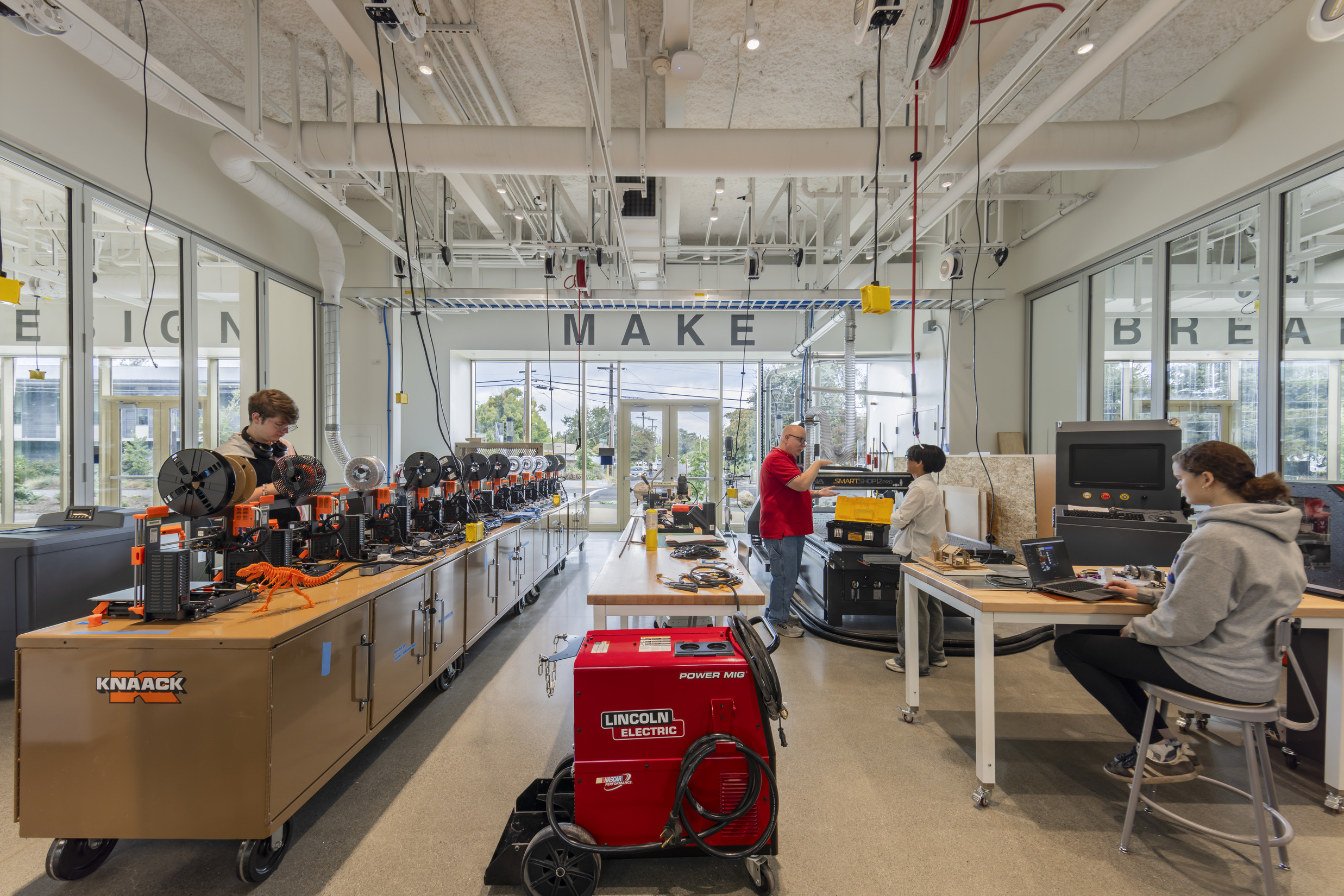
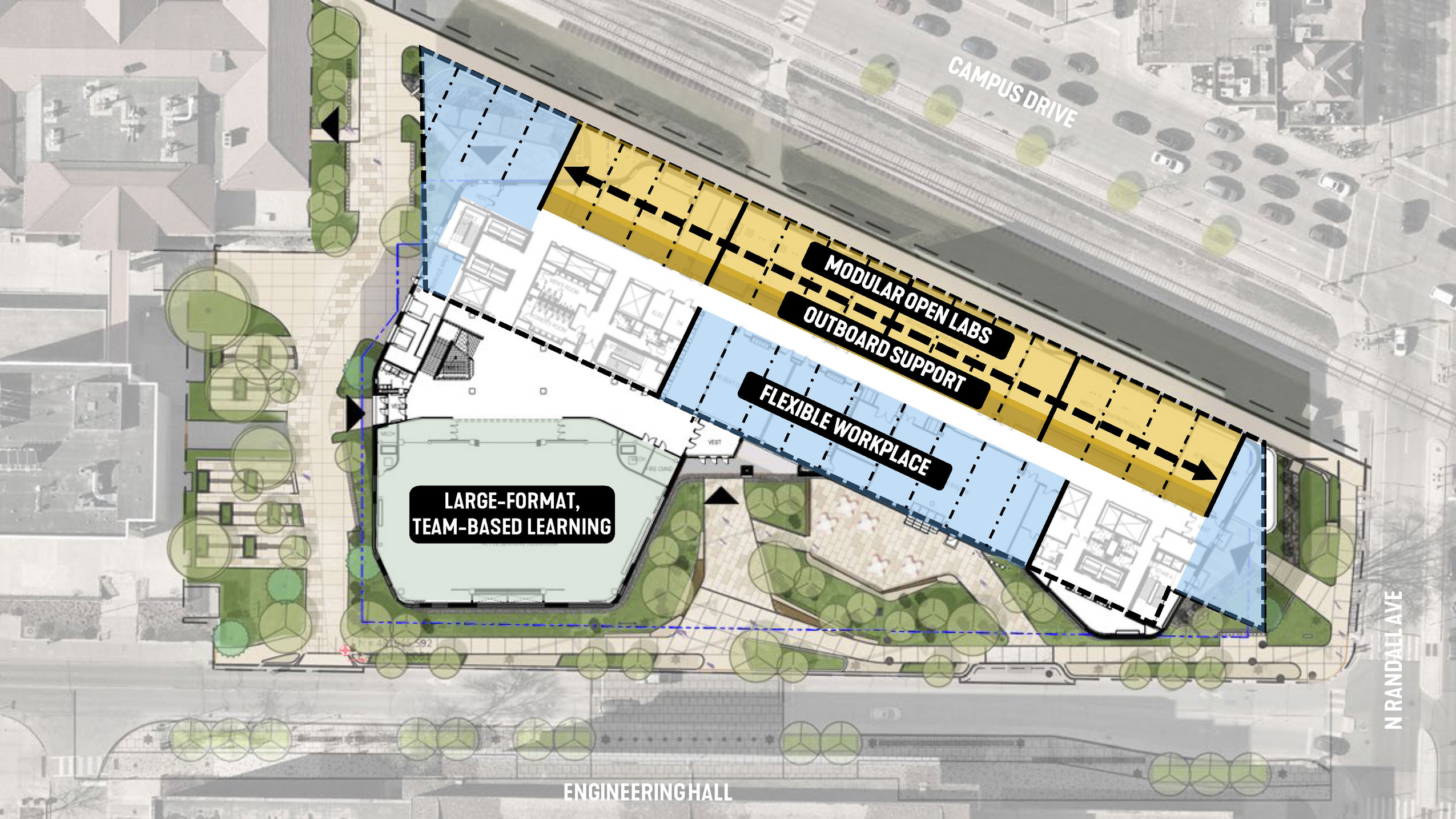
Long-term adaptability is especially critical for labs, which are costly to build and maintain. Renovating for every new curriculum is not practical. Labs designed beyond traditional separations of dry and wet uses can support a variety of STEM disciplines. Designing spaces that prevent a mismatch between activities and capabilities helps avoid wasted resources and inefficient use. Employing a "Resilient Chassis" approach that uses modular design and strategic infrastructure integration allows laboratory layouts and systems to evolve efficiently as research needs change over time.
“Teaching labs should mimic research labs offering students access to chemistry, biology, engineering, computation and beyond in integrated settings,” said Joshua Pierce, Executive Director of the Integrative Sciences Initiative at North Carolina State. “This requires breaking down the traditional barriers between disciplinary teaching spaces to create truly interdisciplinary learning environments that mirror modern workplace settings.”
2. Embrace the Interdisciplinary STEM Mindset
Campus scale scenario planning helps balance vision with budget and physical constraints. A single, strategically located building that complements existing facilities can often deliver greater impact and justify investment more effectively than several large structures.
“As an institution we are helping our students develop hands-on and experiential skills that translate across boundaries and thus you see our students getting training in many varied buildings and physical spaces,” said Dr. Justin Shaffer, Associate Dean of Undergraduate Studies at Colorado School of Mines, and founder of Recombinant Education. “STEM fields are inherently interdisciplinary and the facilities that house STEM programs can reflect that mindset. A distributed approach weaves STEM thinking into the fabric of an academic experience, encouraging collaboration beyond departmental boundaries.”
STEM facilities often serve as campus gateways that highlight the range of collaborative activities. Unique shared spaces ranging from informal lounges to advanced labs like drone cages and data visualization rooms become magnets for students and faculty creating opportunities for cross-departmental interaction and innovation not available elsewhere.
As STEM continues to evolve into broader models such as STEAM and STEM-H, facilities must also adapt to support converging disciplines.
“We need to teach students to be conversant between disciplines rather than experts in everything,” said Joshua Pierce, Executive Director, Integrative Sciences Initiative at NC State University. “The focus is on training students with 80 percent expertise in one field and 20 percent expertise across other fields to be able to work in teams with complementary people. This approach prepares students for the reality that over 90 percent will enter the private sector workforce.”
Preparing students for collaborative, real-world challenges requires fostering deep expertise and cross-disciplinary fluency. Emerging fields like data science and AI ethics demand intersections with humanities, business, and law, inspiring new space typologies, from music data labs to theater engineering maker spaces, that encourage creative collisions and prepare students for diverse, interdisciplinary careers.
3. Create an Ecosystem for Student Success
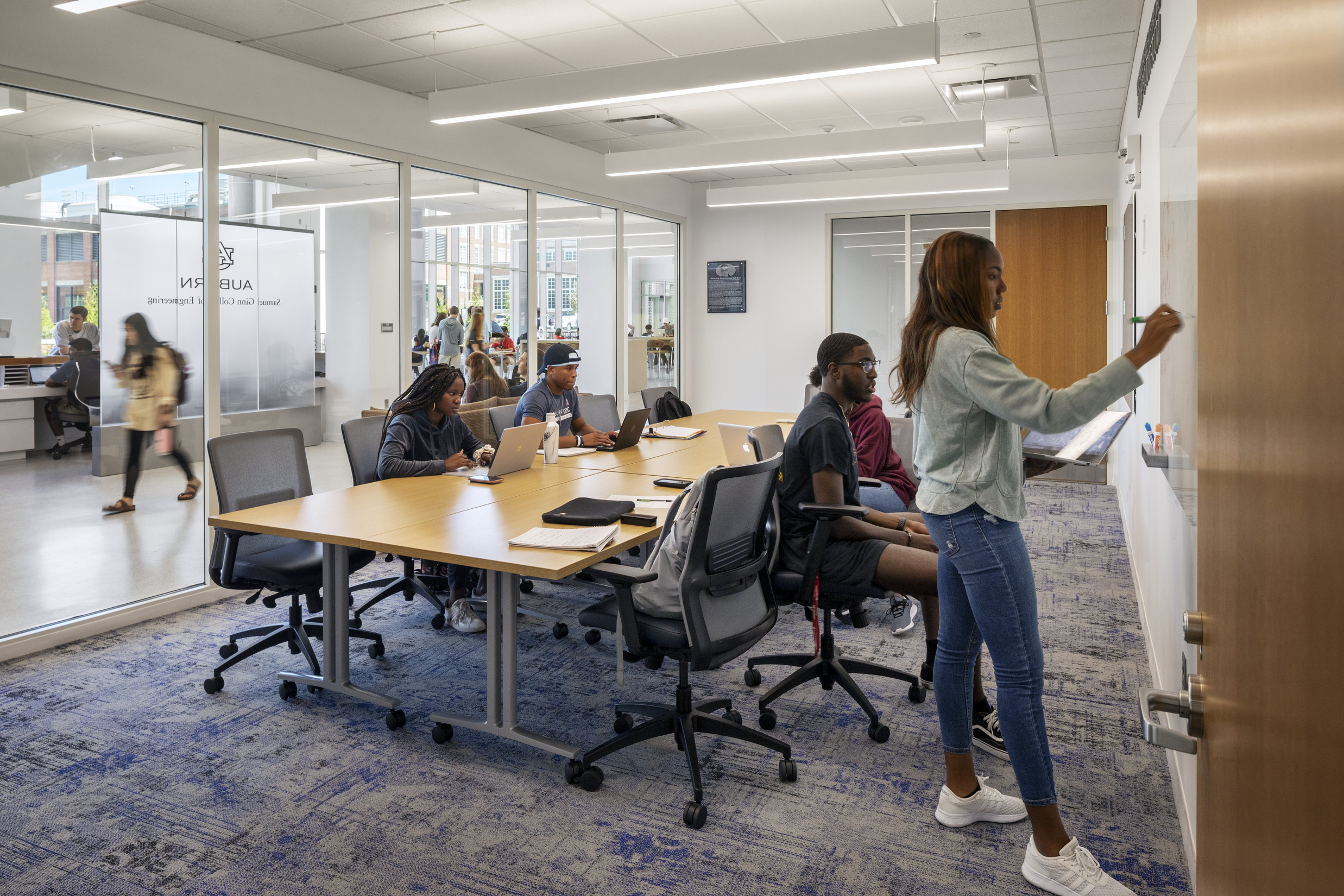
Thriving STEM environments integrate teaching, research, hands-on learning, and student support services to create a seamless environment for success.
Designing spaces that bring these elements together, for example co-locating scheduled teaching and research labs with adjacent pre- and post-lab support areas, is critical. This approach fosters collaboration, encourages early hands-on engagement, and ultimately strengthens STEM retention.
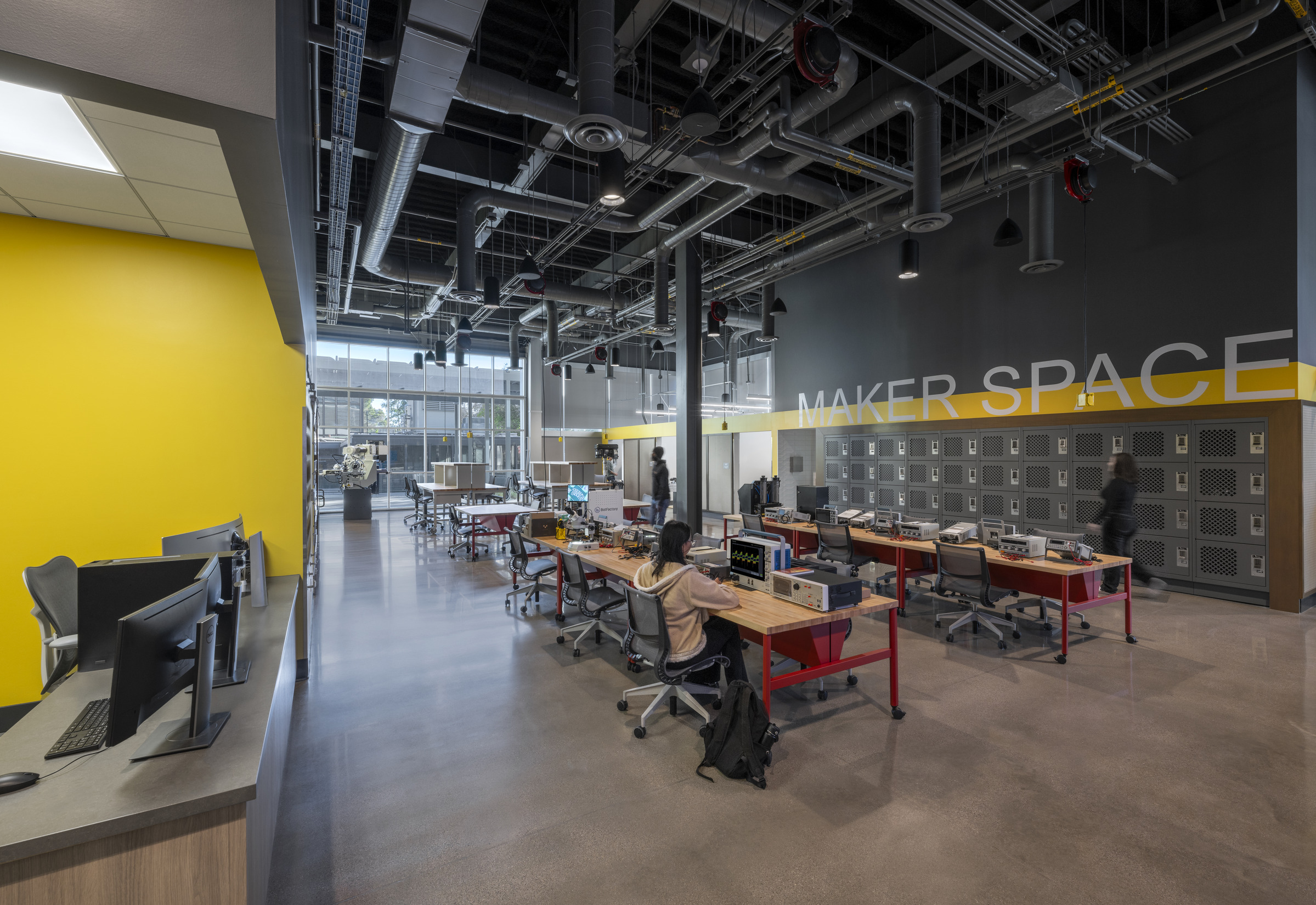
Non-scheduled collaborative spaces extend teaching and research activities beyond the lab (innovation hubs, maker spaces, incubators) with after-hours access to technology and resources for exploration, experimentation, and teamwork. Integrating remote collaboration tools is essential, as Gen Z and Gen Alpha view distance as a connector, not a barrier.
Finally, integrating student support services (advising, career services, childcare, wellness, identity spaces) within STEM ecosystems helps reduce barriers and serve diverse, nontraditional student populations. Wayne Community College in Goldsboro, North Carolina is focusing on expanding access to traditionally underrepresented groups in STEM fields through targeted outreach and support programs. To help students succeed in the workforce, “we anticipate more personalized learning paths, increased emphasis on interdisciplinary skills, and greater integration of work-based learning experiences,” said President Dr. Patricia Pfeiffer at Wayne Community College.